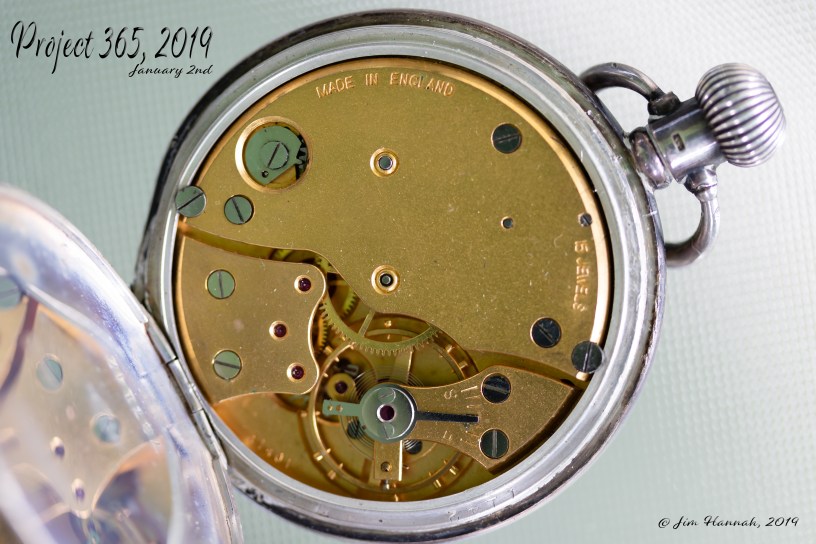
The feature image for this article is my day 2 of my Project 365, 2019. It features the inside of my Father’s pocket watch, which I believe dates from around 1954. Pretty clean inside, despite a somewhat battered exterior, and it runs, if I may say, like clockwork. Very accurate, and I wind and run it a few times a year to keep it in good condition, but not so much as to introduce wear.
After my initial experiments yesterday with my new Canon EF-S 60mm F2.8 Macro, my first true 1:1 Macro lens, I decided to continue my experiments outdoors on the patio, for nice even daylight. I chose the watch as a heavier subject that wouldn’t be subject to moving around in the breeze because of it’s weight, so I’d be able to use slower shutter speeds and make finer focus adjustments using my Camera’s focus magnification.
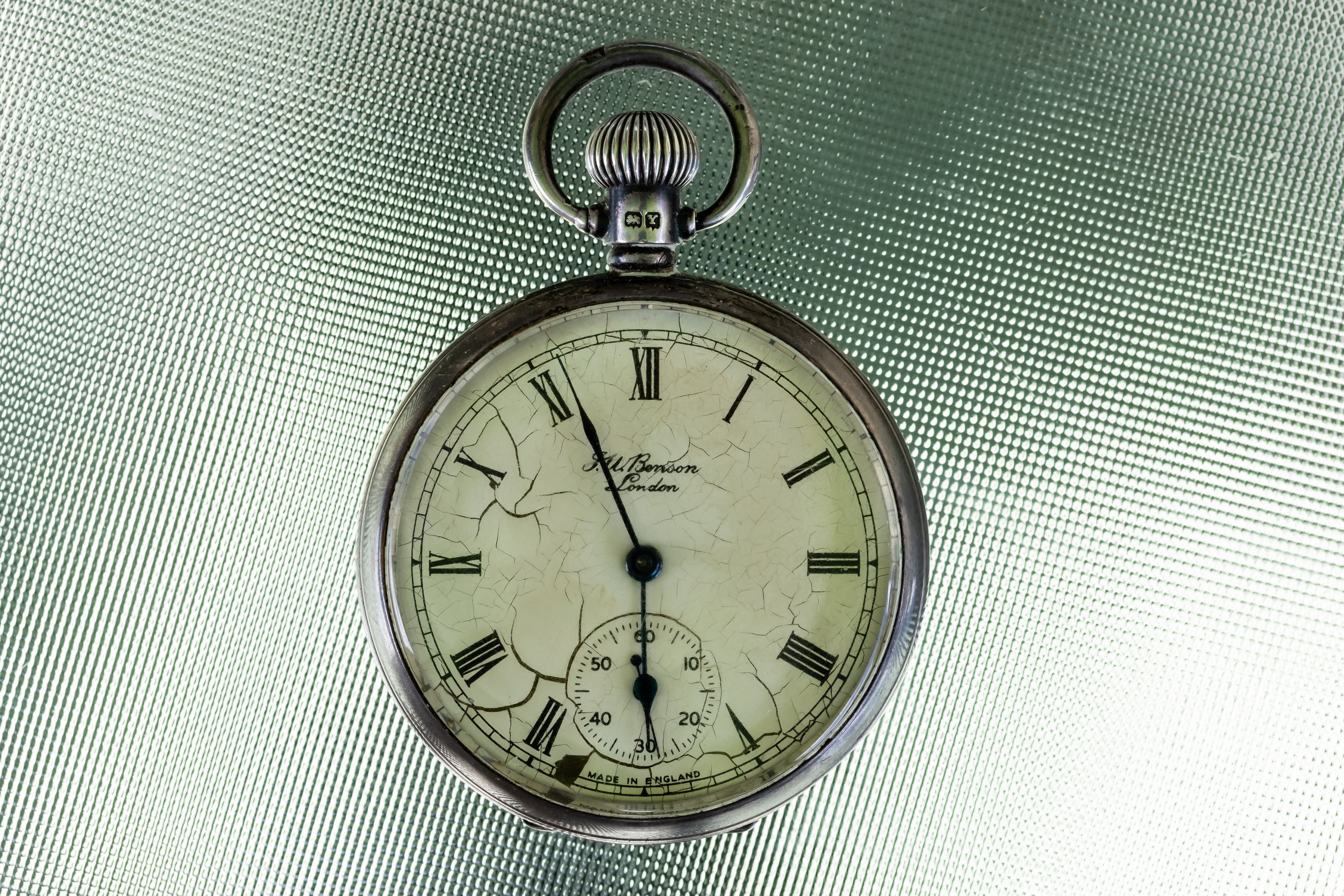
I discovered yesterday, that even stopped down to F8, this lens wouldn’t allow enough depth of field for my shots of a tiny flower, so today I decided to try focus stacking several images in Photoshop, and combining them to be able to have more of the subject in focus. This technique involves taking several images, with the subject and camera static, but changing the focus plane slightly for each shot. When the images are blended in Photoshop (or other image editing software), the sharp areas from each image are used to simulate a greater depth-of-field than would otherwise be achievable. I’ve used the technique before, in landscape photography, so that I could have everything from a close foreground interest to infinity in focus at the same time, but this was the first time I tried it with Macro Photography.
These four images are the shots where I altered focus slightly in each shot, initially focussing at the closest level, the jewel and the screws, and gradually changing the focus in steps, until for the last shot I was focussed on the watch spring.
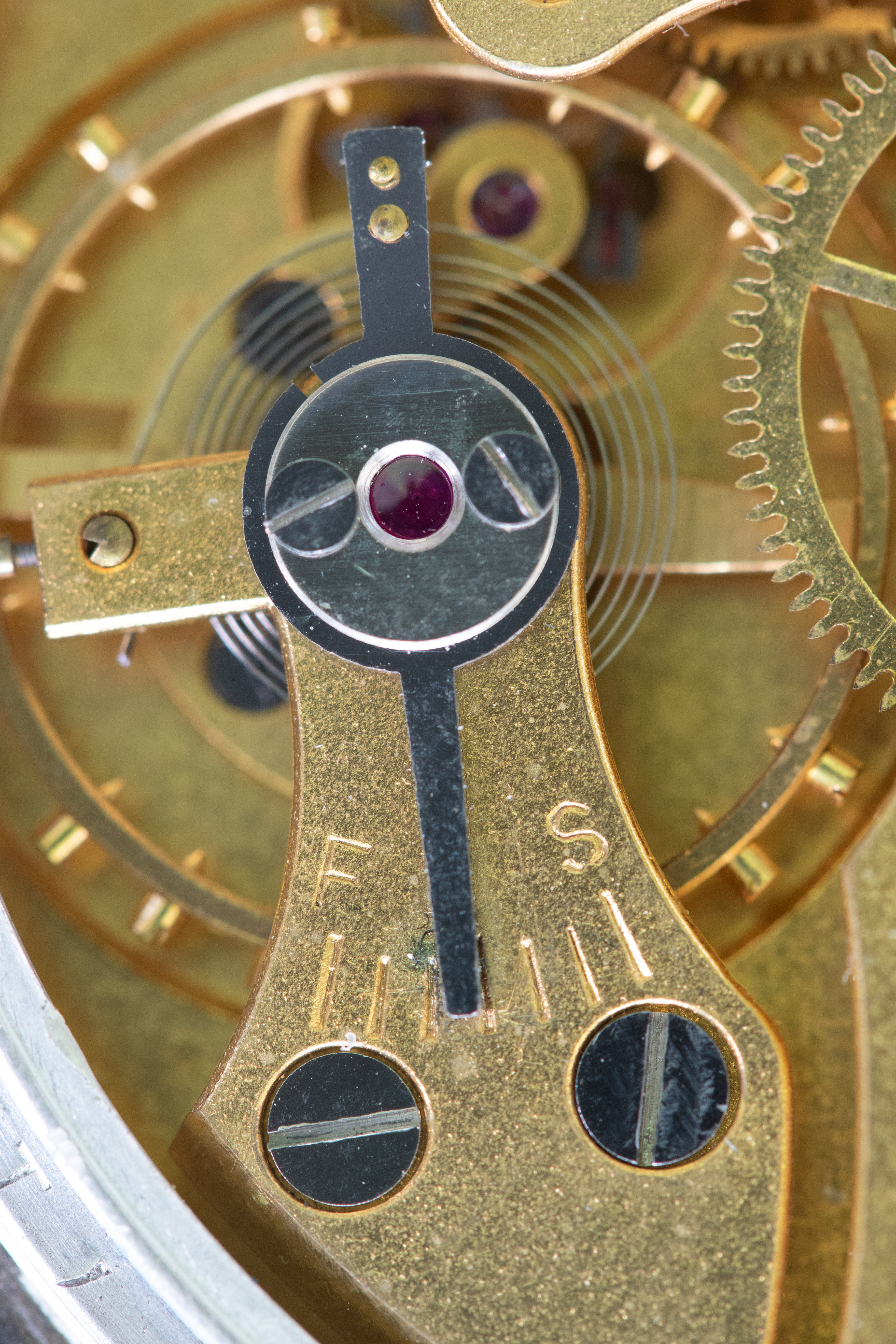
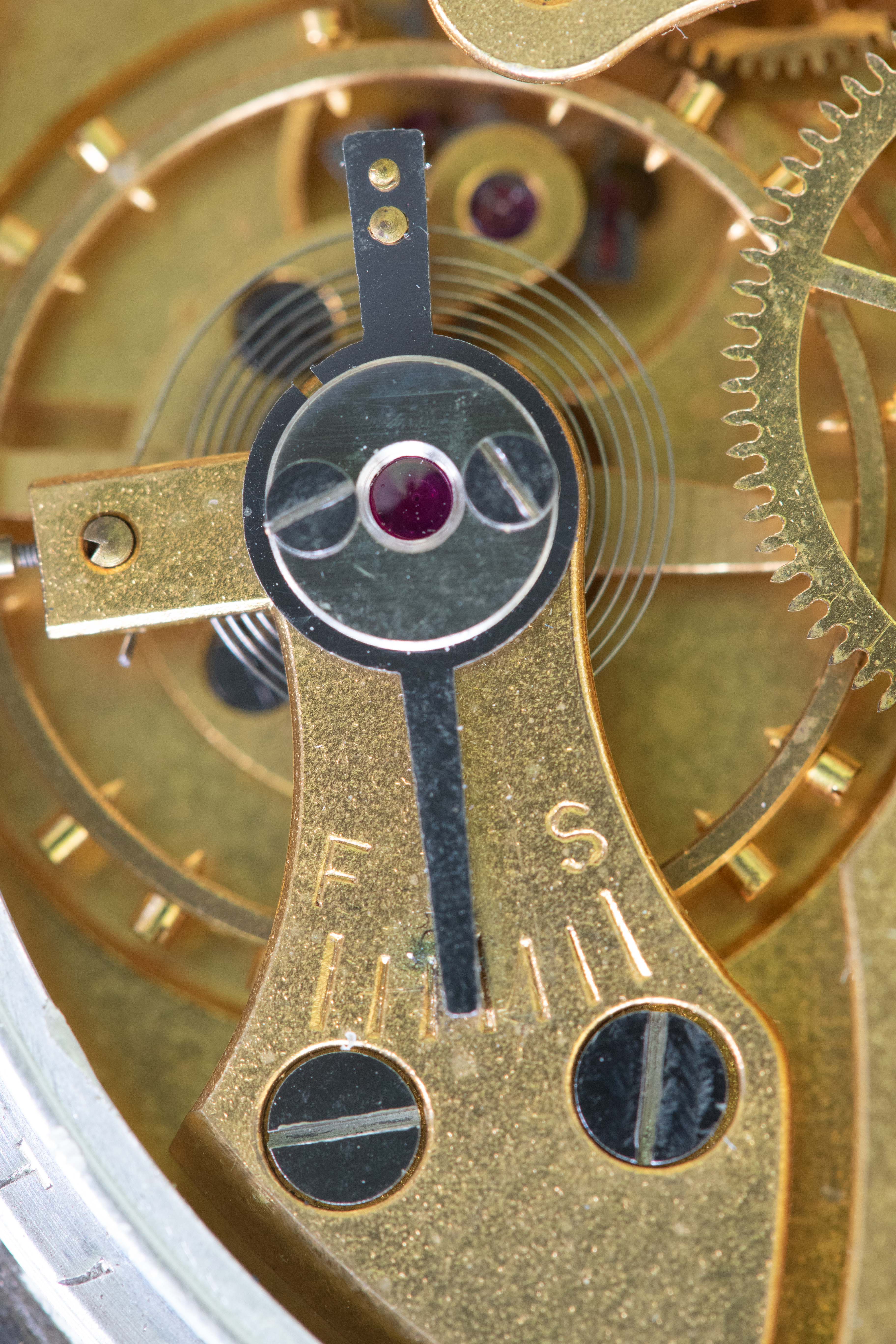
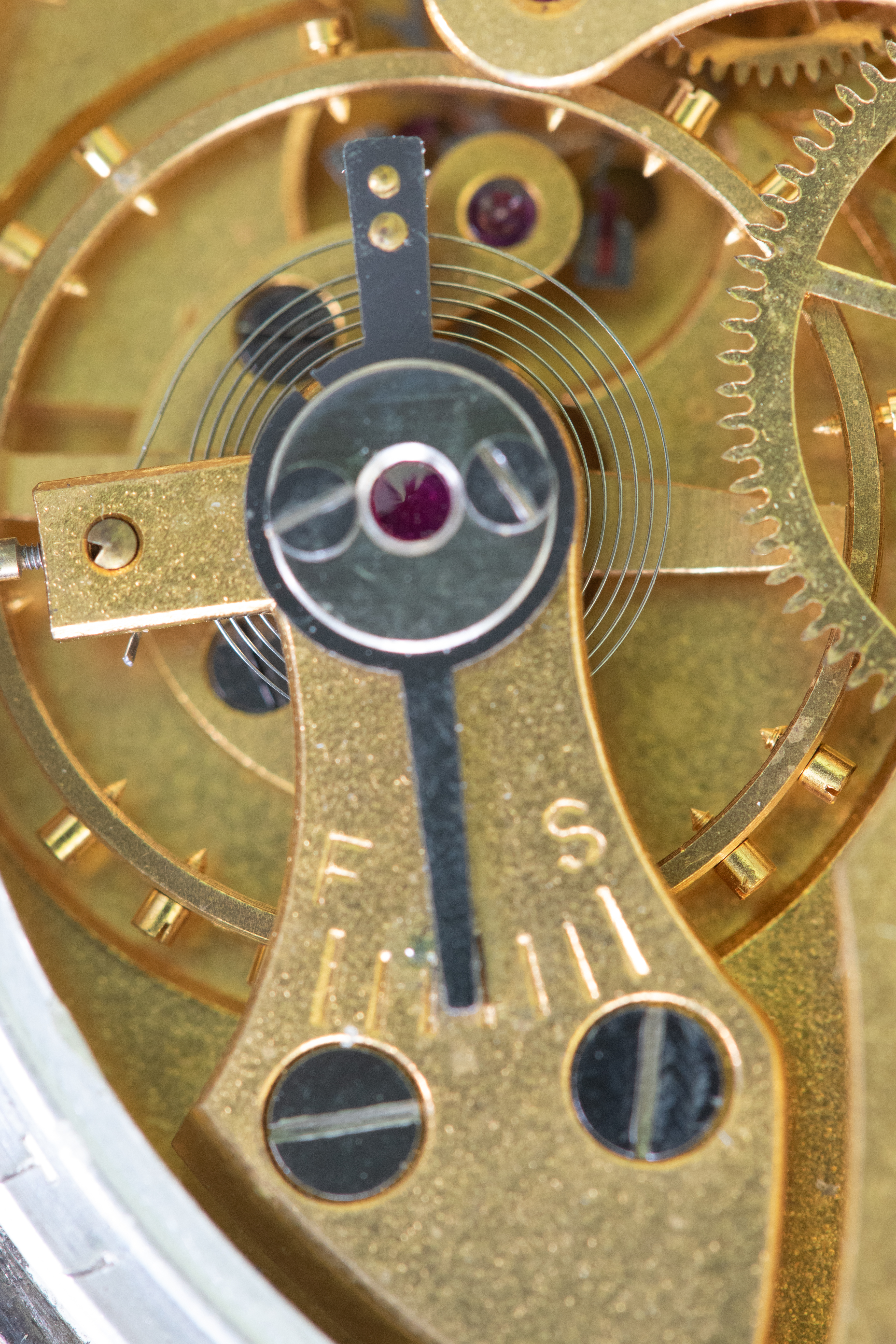
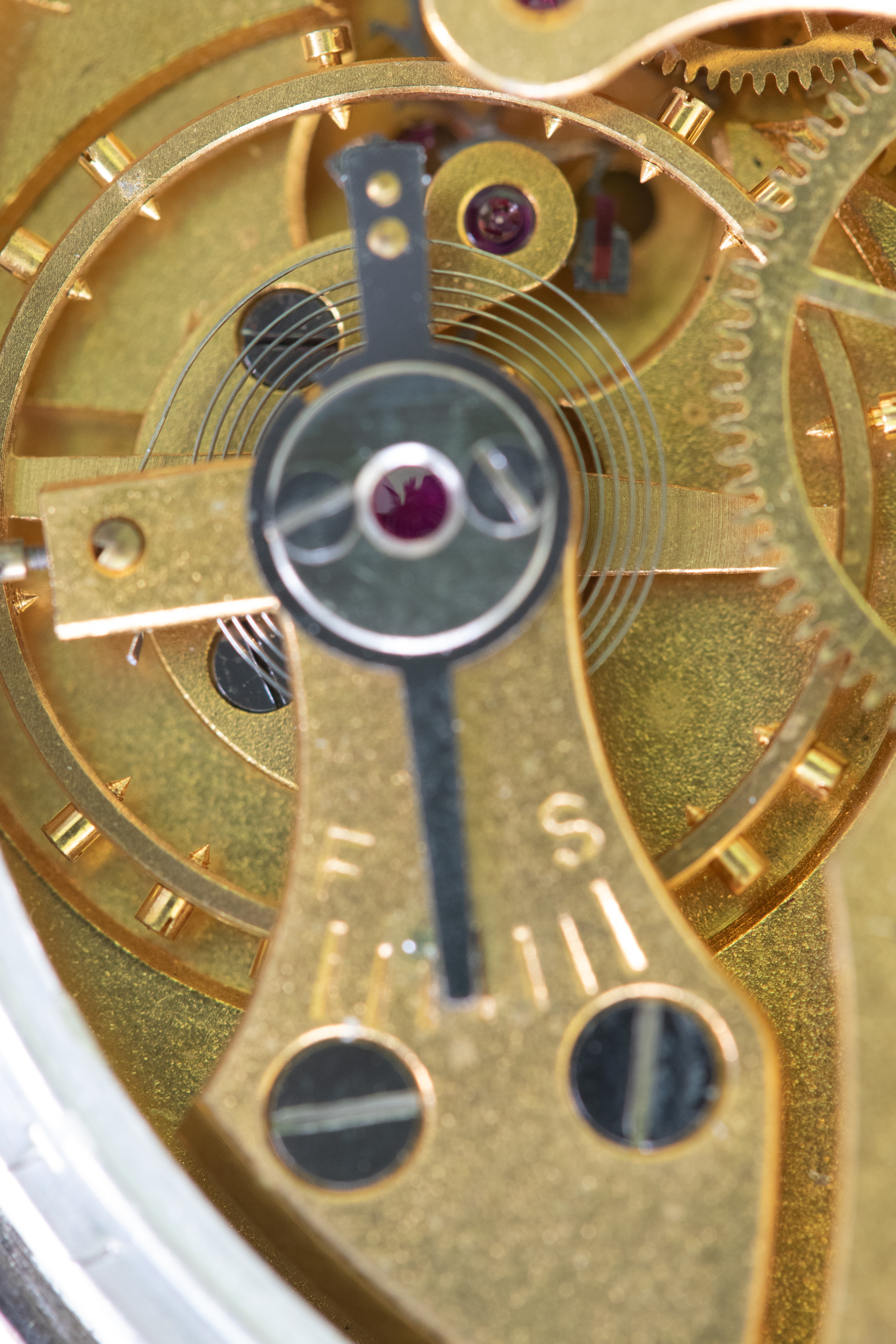
I felt that these four shots would be enough for me to combine them and get sufficient depth-of-field to show all the areas I wanted to show in crisp focus. Below, is the stacked shot which I did in Photoshop. Four shots can be blended quite quickly…my computer managed to do this in about half a minute or so. I have done other images with more than a dozen different shots that took several minutes for photoshop to process.
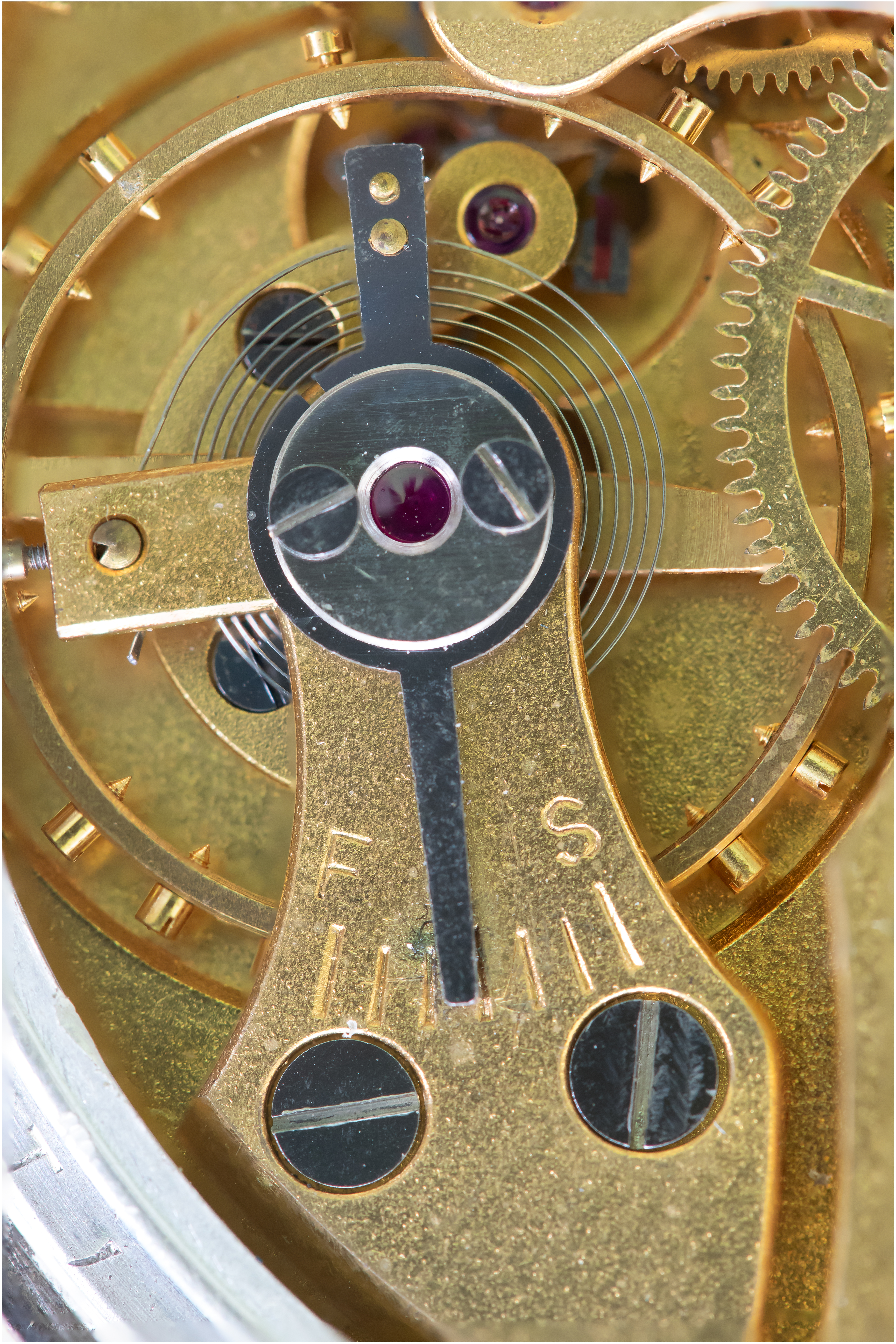
I was very pleased with this result; the four images blended perfectly to provide just the depth of sharpness I wanted for the final image. Focus Stacking is an important part of modern digital macro work now, enabling us to show sharp detail that simply wasn’t possible in film days. Given that I used an ISO setting of 800 for these shots so that I could get an acceptable shutter speed of 1/50th second at f/5, I’m very pleased with the level of noise. Only very minimal sharpening and noise reduction has been applied to any of these shots.


Given that this is a watch that has never been restored, and was used daily for at least the first 30 years of it’s life, I think the fact that it still works and keeps accurate time, and is very clean inside makes it a very nice “real” example of the JW Benson brand. I do like originality in antique items, so although I might have the face replaced and a light polish done at some time, I like the fact that it’s condition tells something of it’s life. For context, my Father was a busman from the 50’s through to the mid 70’s, so this watch spent the early years of it’s life helping to keep buses running on time in Carlisle and Glasgow.
I think my 60mm F2.8 Macro lens is going to spend quite a lot of time on my camera in the future. It offers me the opportunity to expand my range of subjects, and I’m sure it will be of considerable help to me in Project 365, 2019.
 Shoot The Adventure
Very nice shots📷, check out my blog
LikeLike
Thanks Tiny, I will.
J
LikeLike